South Africa’s efforts to finalise its national Artificial Intelligence (AI) policy have faced further delays after officials from the Department of Communications and Digital Technologies told Parliament they were not mandated to brief MPs on the revised policy.
The department was scheduled to update Parliament’s Portfolio Committee on Communications on 17 November about progress on the policy’s redrafting. However, the meeting was disrupted after senior officials indicated they were not authorised to lead the delegation.
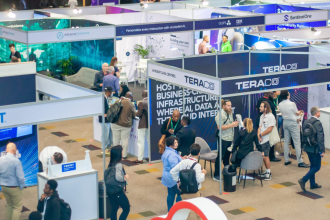
According to a report by the Parliamentary Monitoring Group, acting director-general Gcobisa Soci was attending the Africa Tech Festival, where she was assisting the deputy minister.
Jeanette Morwane, the deputy director-general responsible for the policy, told MPs that she faced the same mandate-related concerns raised by another departmental official.
The committee subsequently postponed the discussion, along with an update on the Independent Communications Authority of South Africa’s (Icasa) performance management system.
Democratic Alliance MP Tsholofelo Bodlani described the department’s handling of the meeting as unacceptable and disrespectful.
Committee chairperson Khusela Sangoni Diko also questioned the department’s leadership and availability, saying MPs were increasingly concerned about the acting director-general’s absence from parliamentary meetings.
Diko said the committee would write to the department requesting an explanation.
Revised AI Policy Expected By March 2027
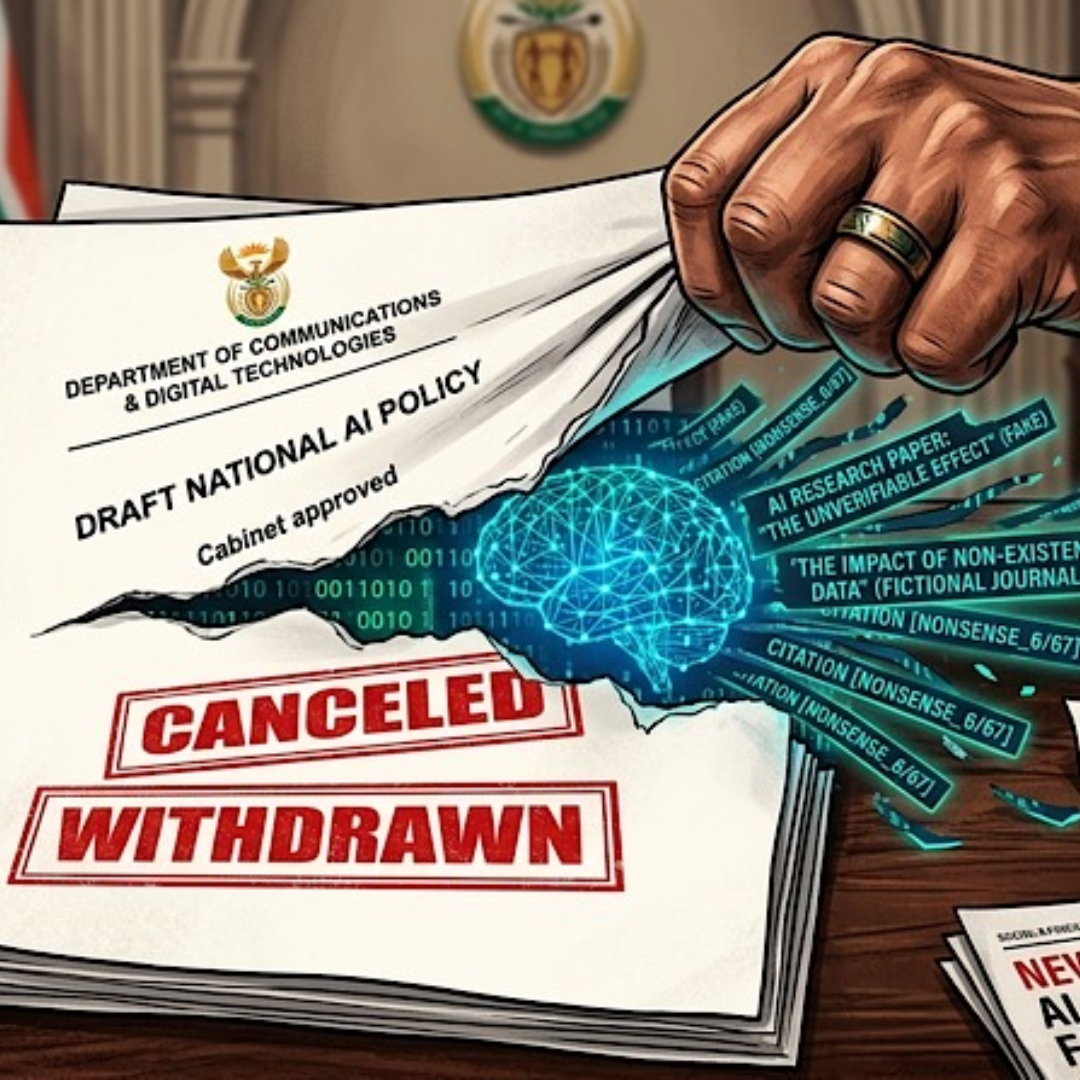
The latest developments come after Communications and Digital Technologies Minister Solly Malatsi withdrew South Africa’s draft national AI policy in April 2026.
The decision followed the discovery of fabricated academic references in the document, raising concerns about the quality and credibility of the policy.
The department’s drafting team has until 30 November to submit the revised document to the minister. It aims to take the policy to Cabinet by March 2027, several months later than initially anticipated.
Parliament Considers Dedicated AI Legislation
Beyond the delayed policy, Parliament is also considering whether South Africa needs a dedicated AI Act to regulate the development and use of artificial intelligence.
During the same meeting, parliamentary researcher Khanyisani Xulu presented a position paper proposing a legal framework built around five key principles.
These include prohibiting AI practices that threaten constitutional rights, introducing risk-based regulation and requiring organisations developing or deploying AI systems to establish proper governance and compliance measures.
The proposal also calls for human oversight of significant decisions made using AI, as well as independent audits and greater transparency around how high-impact AI systems reach their conclusions.
Xulu argued that South Africa could contribute to global AI governance by placing greater emphasis on the ability to explain and independently assess how AI systems produce their results.
The proposal does not recommend establishing a new AI regulator. Instead, it suggests creating an AI Regulators Forum to coordinate existing institutions, including Icasa, the Information Regulator, the Competition Commission and the National Consumer Commission.
Parliament would oversee the proposed framework through a joint committee on AI.
While MPs welcomed the research, concerns were raised about overlapping regulatory responsibilities, the practical challenges of auditing complex AI systems and the possibility that strict regulations could discourage innovation.
DA MP Adrian Roos also questioned a proposed technical requirement for reproducing AI system outputs, arguing that it was not widely imposed in other jurisdictions.
The position paper remains a proposal for discussion and has not been adopted as Parliament’s official position.
Parliament Reopens Icasa Council Nominations
The committee also agreed to expand the search for candidates to fill four vacancies on Icasa’s council.
The decision followed the withdrawal of five candidates from a shortlist of 23, while another candidate was disqualified for failing to provide copies of qualifications listed on their CV.
Fifteen candidates had already been interviewed.
Parliament announced on 19 November that six additional candidates would be considered, alongside two candidates who had previously been unavailable for interviews.
Public submissions on the candidates remain open until 26 November 2026, with the appointment process expected to be completed by the end of February 2027.
The developments place further focus on South Africa’s digital policy agenda, as government works to establish a regulatory framework for AI while balancing public protection, accountability and technological innovation.
Main Image: 2 Oceans Vibe