Japan’s famously clean streets come with a surprise for many visitors: finding a public rubbish bin can be surprisingly difficult.
Tourists exploring Tokyo can quickly find themselves carrying empty coffee cups, food wrappers and other waste for hours. While the lack of bins may seem strange in a country known for its cleanliness, the reasons behind it are rooted in a combination of history, policy and social habits.
A major turning point came in March 1995, when members of the Aum Shinrikyō cult carried out a sarin gas attack on Tokyo’s subway system. Following the attack, authorities removed or sealed many public rubbish bins as part of heightened security measures.
Later terrorist attacks around the world reinforced the approach, but security is only part of the reason bins remain relatively scarce today.
Municipalities have also reduced the number of street bins because of maintenance costs and misuse. In Kyoto, for example, the number of public bins was cut significantly after authorities faced problems including household rubbish being dumped in them.
Japan’s clean streets are also the result of long-running public policies. Municipalities have invested in anti-littering campaigns, environmental education, street cleaning and urban design aimed at discouraging litter.
Social expectations play an important role too. The principle of meiwaku o kakenai, or avoiding causing inconvenience to others, encourages people to take responsibility for their own waste.
Daily habits also mean people often generate less rubbish while travelling around. Eating while walking or on public transport is relatively uncommon, reducing the amount of waste produced outside the home.
Tourists, however, tend to have a different experience. Long sightseeing days often involve convenience-store snacks and drinks, leaving visitors with rubbish they cannot easily dispose of.
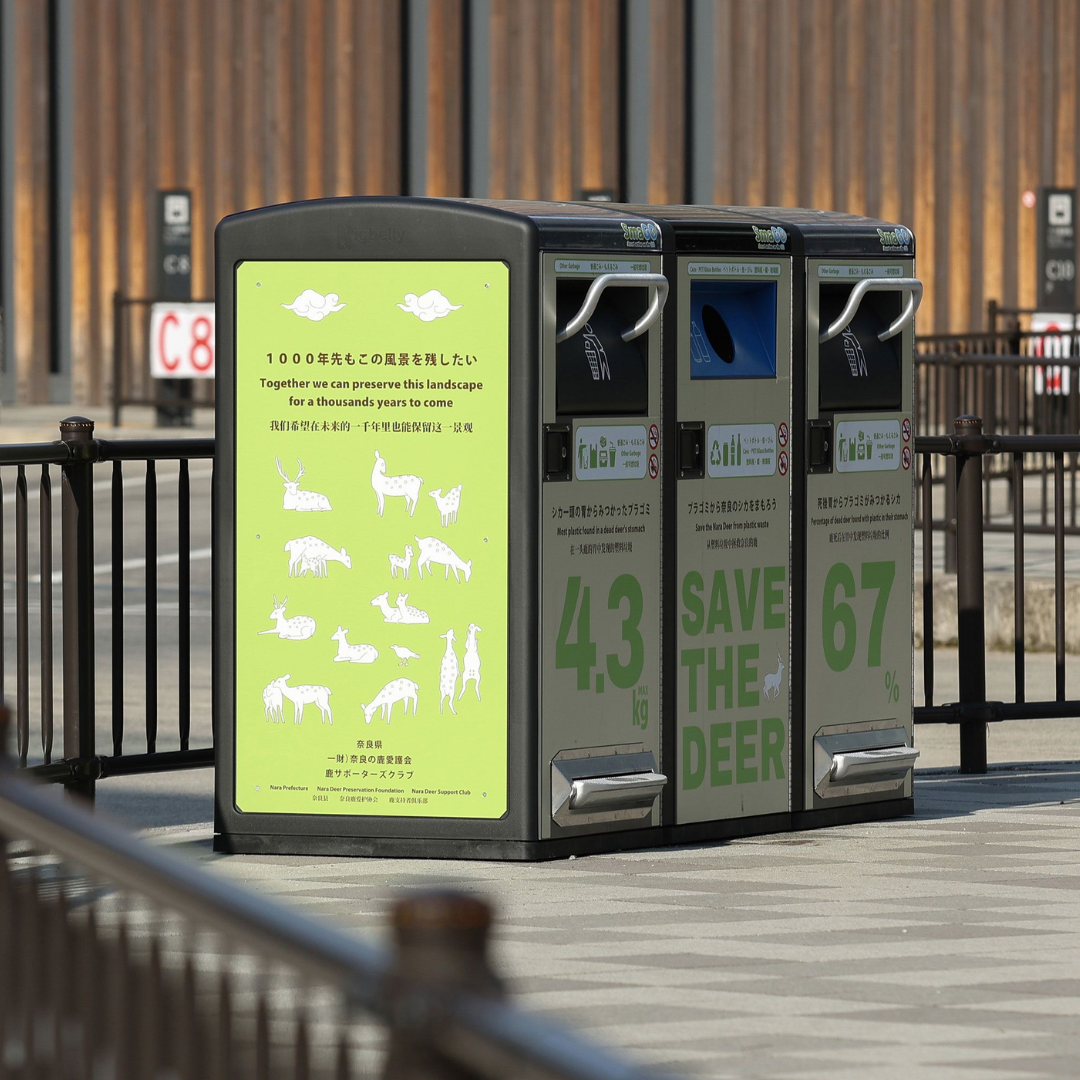
Bins have not disappeared completely. They can still be found at places such as train stations, where transparent containers are often positioned near ticket gates and monitored for security.
Tokyo is also experimenting with new solutions. Shinjuku Station has begun trialling mobile rubbish-bin robots designed to collect waste from passengers.
Until such systems become more widespread, visitors may need to adopt one of Japan’s everyday habits: carry your rubbish with you until you find an appropriate place to dispose of it.
Main Image: CNN