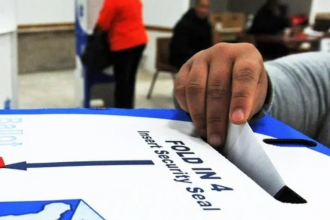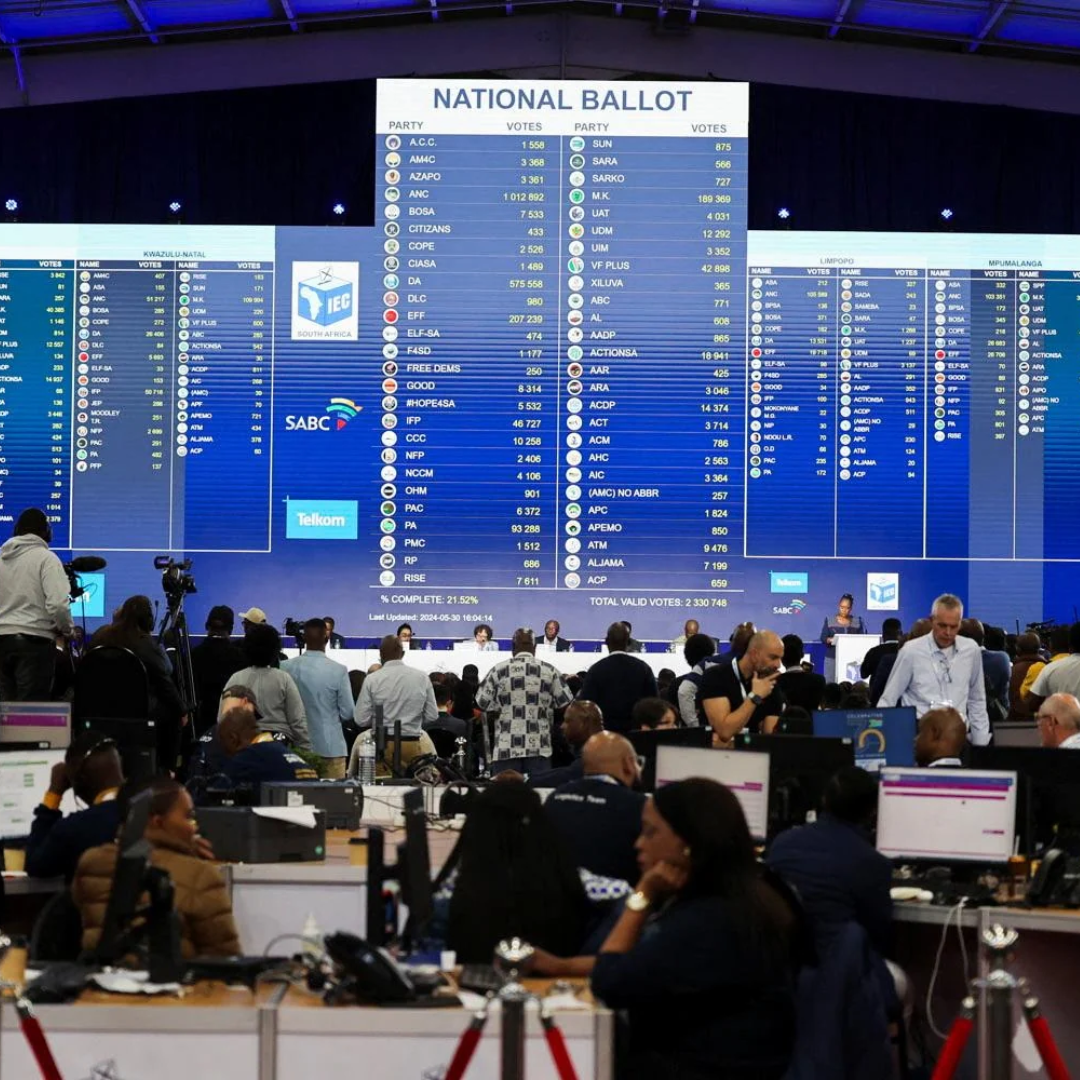
South Africans headed to the polls on Wednesday, 4 November 2026, to elect new local government representatives in an election that could reshape the country’s political landscape. Political parties competed for votes amid growing public concerns about unemployment, corruption, poor service delivery, water shortages and electricity challenges.
The elections were particularly important for the African National Congress (ANC), which faced another major test following its loss of an outright national parliamentary majority in the 2024 general elections.
According to the Electoral Commission of South Africa (IEC), approximately 29.2 million voters were registered, with 23,696 voting stations operating across the country. A total of 546 political parties participated in the elections. ABC News+1
Early Results Show Close Competition
As vote counting continued on Thursday morning, 5 November, preliminary results indicated a close contest between the ANC and the Democratic Alliance (DA).
With approximately 12% of votes counted, the ANC was leading nationally with around 32%, followed by the DA at approximately 30%. In Gauteng, early figures showed the DA ahead with 40.55%, while the ANC had 18.87% and ActionSA 15.14%. These figures remain preliminary and could change as more votes are counted. Internazionale+1
Other parties, including the Economic Freedom Fighters (EFF), uMkhonto weSizwe (MK) Party and Patriotic Alliance (PA), are also competing for representation in municipal councils.
Voting Challenges And Incidents
Although voting was generally peaceful, some stations experienced delays linked to local protests and logistical challenges.
In eThekwini Municipality, the IEC reported the theft of unused ballot papers and an official stamp. A case was opened with the South African Police Service (SAPS), with precautionary measures taken to protect the election process. South African Government
What Happens Next?
The IEC is continuing to count and verify votes before announcing the final results. The outcome will determine which parties control municipalities and where coalition agreements may be necessary to establish governing councils.
Major municipalities, including Johannesburg, Tshwane, Cape Town and eThekwini, are among those attracting attention as parties compete for political control.
South Africa’s 2026 Local Government Elections represent an important moment for the country’s democracy. While preliminary results show strong competition between major political parties, the final outcome will determine the future of municipal leadership.
For many South Africans, the biggest expectation remains improved service delivery, accountable leadership and better management of local communities.
Main image: Reuters.com