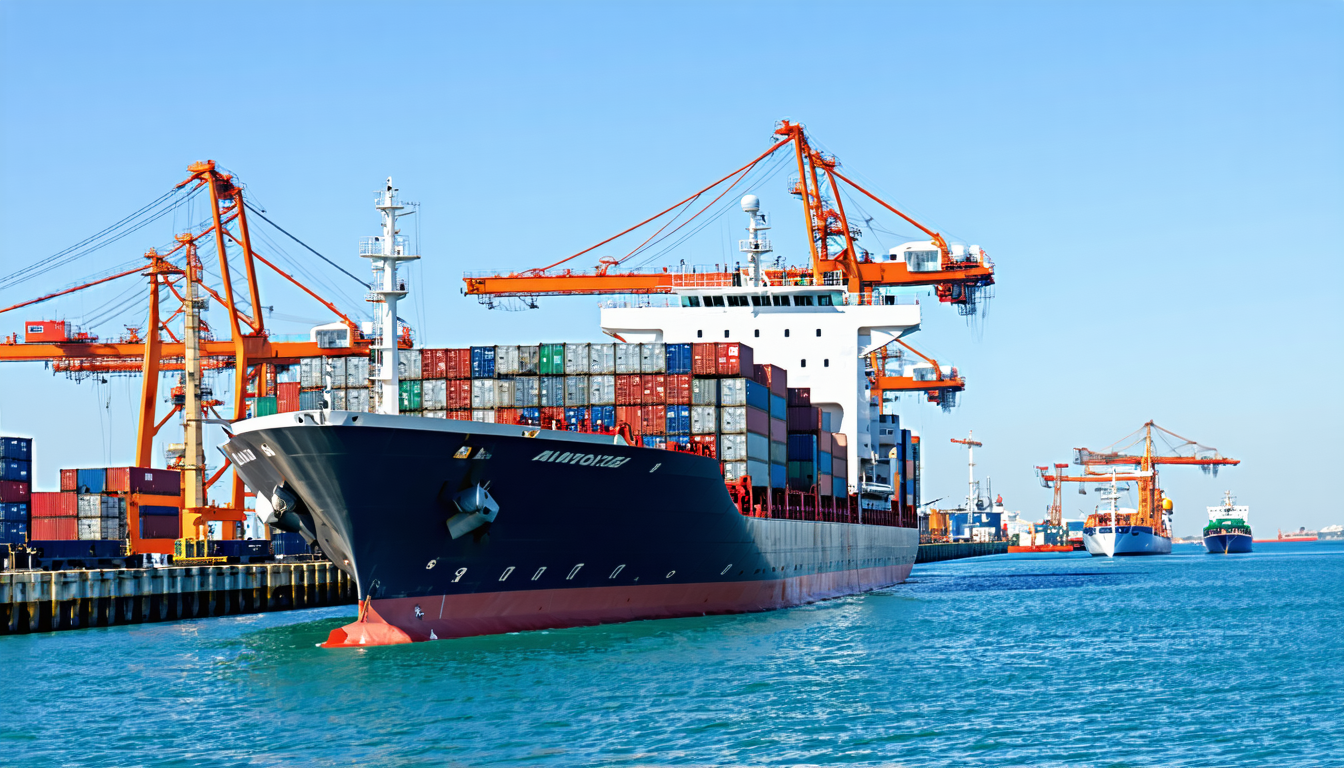
Global shipping company Maersk has announced it will discontinue its AMEX service, which previously provided a direct shipping route between South Africa and the US East Coast. The move is expected to significantly increase costs and shipping times for South African exporters, while raising broader concerns about the resilience of the country’s supply chains.
The decision comes at a time when global trade dynamics are already under pressure due to new US tariffs, and experts say the combined impact could be damaging to key export industries — including technology and manufacturing.
Only One Direct Route Left
Speaking to CapeTalk, Andrew Pike, head of the ports, rail, and logistics sector at law firm Bowmans, warned that Maersk’s exit from the South Africa–US route would leave local exporters with limited options.
“There are currently only two lines operating between South Africa and the US East Coast, one being Maersk and the other MSC,” Pike said. “If Maersk pulls out, that leaves just MSC — and I doubt very much that MSC can carry all the volume on its own.”
Pike added that once Maersk’s AMEX service is discontinued, goods will need to be rerouted via Europe — resulting in delays of two to three weeks and a sharp increase in freight costs.
Cost Hikes on the Horizon
The rerouting via European ports such as Rotterdam, Antwerp, or Frankfurt will introduce additional handling costs, according to Pike. Transshipment alone could add $200–$250 (around R3,500–R4,400) per container, and fuel costs will rise due to the longer route.
“We’re not only looking at higher freight charges, but also congestion surcharges at busy European hubs,” he said. “When you combine that with the newly imposed 30% US tariff, it becomes completely unaffordable for many US importers — and they’ll start sourcing goods from elsewhere.”
Knock-On Effects for Technology Sector
The ripple effects of these developments are already being felt in South Africa’s tech industry. Esquire Technologies, a major tech distributor, warned that prices on tech products could climb in the coming months due to both the shipping changes and the new tariffs.
Esquire CEO Mohamed Cassim said while his company had anticipated disruptions and stocked up in advance, restocking under current conditions would come at a higher cost.
“The 30% tariff isn’t just affecting agriculture and auto parts — it’s also hurting confidence in sectors like technology,” said Cassim. “Even though we don’t export much ICT hardware to the US, we’re still impacted by the supply chain fallout.”
He explained that many electronics sold in South Africa are assembled in Asia, but critical components like chipsets and processors often originate in the US — making them vulnerable to the trade war’s ripple effects.
“We expect rising costs across the ICT value chain,” Cassim said. “Distributors, retailers, and ultimately consumers will have to absorb the increases. And with margins already tight, there’s very little room to manoeuvre.”
Local Tech Industry Could Shrink
Vicus Grové, CEO of E-Tax Global Advisory, told MyBroadband that South Africa’s ICT sector, which contributes around 8% to GDP, will be vulnerable to reduced competitiveness due to the US tariffs.
“While South Africa doesn’t export a huge volume of finished tech products to the US, we do export components — like printed circuit boards and telecoms parts — valued at about $460 million (R8.1 billion) in 2024,” Grové said.
He warned that the tariffs could lead to a 12–15% contraction in local tech exports over the next year, hitting small and medium-sized enterprises (SMEs) the hardest due to their limited access to alternative markets.
Government Urged to Act
With both trade costs and market access deteriorating, industry leaders are urging government intervention. Pike, Cassim, and Grové all emphasized the need for new trade agreements, support for exporters, and the urgent development of alternative logistics routes.
“South Africa is at risk of losing key export markets and job opportunities if we don’t act fast,” said Cassim.
As Maersk exits and US tariffs take hold, South Africa’s exporters — especially in sectors like automotive, agriculture, and tech — face an uphill battle to stay globally competitive. Without urgent solutions, the cost of doing business abroad may soon become too high for many to bear.
Main Image: African Farming