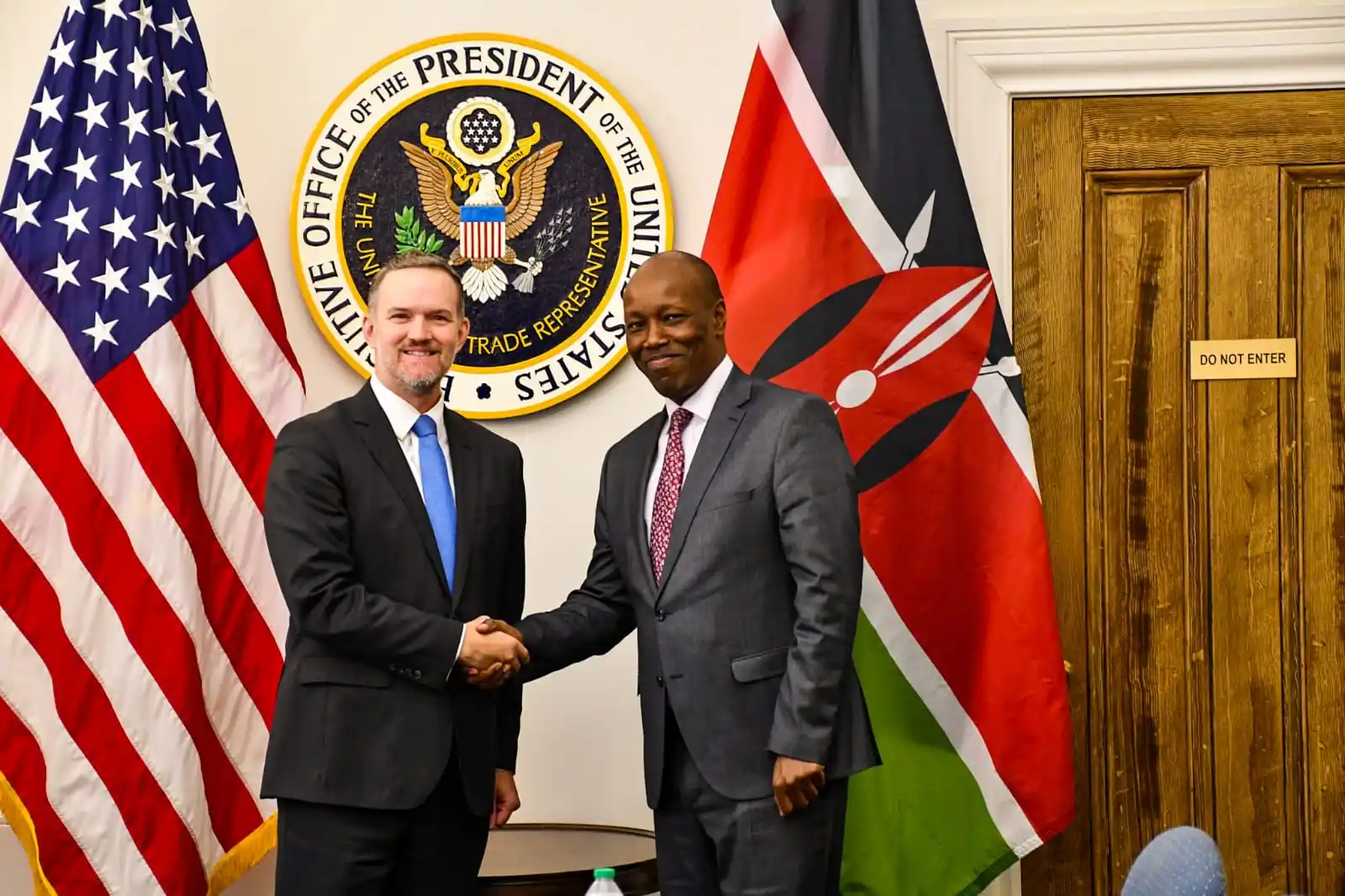
The African Growth and Opportunity Act (AGOA), which has facilitated duty-free access for thousands of African products to U.S. markets for the past 25 years, officially expired on Tuesday, leaving the future of trade between the United States and Africa shrouded in uncertainty.
Since its introduction in 2000, AGOA has been a cornerstone of U.S.-Africa trade relations, offering African nations preferential access to the lucrative U.S. market. This has been particularly significant for sectors like textiles and apparel, where countries like Kenya have been able to compete more effectively with Asian exporters from countries such as Bangladesh and Vietnam.
Kenya’s Textile Sector Faces Dire Consequences
In Kenya, the textile and apparel sector has seen dramatic growth under AGOA, with exports to the U.S. skyrocketing from around $50 million in 2000 to approximately $500 million today. However, this success is now under threat, with many businesses fearing the worst in the wake of the agreement’s expiration.
“Clearly, if AGOA goes away, we have zero chance to compete with Asian countries. There is no way we can survive,” said Pankaj Bedi, CEO of United Aryan clothing factory in Kenya, highlighting the dire consequences for local manufacturers. Bedi, who also chairs the Apparel Manufacturers and Exporters group at the Kenya Association of Manufacturers, warned that the entire sector could collapse without the preferential access AGOA provided.
In Kenya alone, over 66,000 jobs—many held by women—are directly linked to the textile and apparel sector, which now faces a precarious future. Workers like Julia Shigadi, a machinist in Nairobi’s garment district, expressed their fears, with Shigadi stating, “For all those years, this has been my bread and butter. I only depend on this job. So if it is gone, it means my life is gone too.”
AGOA’s Legacy and the Future of Trade
AGOA was more than just a trade agreement—it was a lifeline for many African economies, allowing goods ranging from textiles to agricultural products to enter the U.S. without the heavy tariffs that would otherwise apply. It gave African nations the hope that they could build export economies immune to blanket tariffs and trade barriers imposed by the U.S., such as the 10% tariffs announced earlier this year.
At the United Nations General Assembly last week, Kenyan President William Ruto made a public plea for a five-year extension of AGOA. However, a White House official confirmed on Monday that the Trump administration had only supported a one-year renewal of the deal, adding to the uncertainty surrounding the future of U.S.-Africa trade relations.
The Impact of U.S. Tariffs and AGOA’s Expiration
Experts caution that the end of AGOA, combined with new tariffs announced by the U.S. under the Trump administration, could have serious long-term consequences for African economies. Raphael Obonyo, a public policy expert at UN Habitat, noted, “In the short run, it looks manageable, but in the long run, the challenges are going to be devastating, and they are going to spill over.”
While some industries may be able to adjust to the end of AGOA in the short term, many African countries—particularly those heavily reliant on exports to the U.S.—will face significant economic hardship if new trade agreements are not swiftly negotiated.
A Clouded Future for U.S.-Africa Trade
As the expiration of AGOA casts a shadow over the economic prospects of many African nations, the urgency for new trade deals or an extension of the agreement has never been clearer. African countries, particularly Kenya, now find themselves at a crossroads. The clock is ticking, and the future of trade with the U.S. hangs in the balance, with millions of jobs and livelihoods at stake.
Main Image: Serrari Group