Microsoft is pushing further into on-device artificial intelligence, unveiling new AI coding models and security technology designed to allow AI agents to operate directly on Windows PCs.
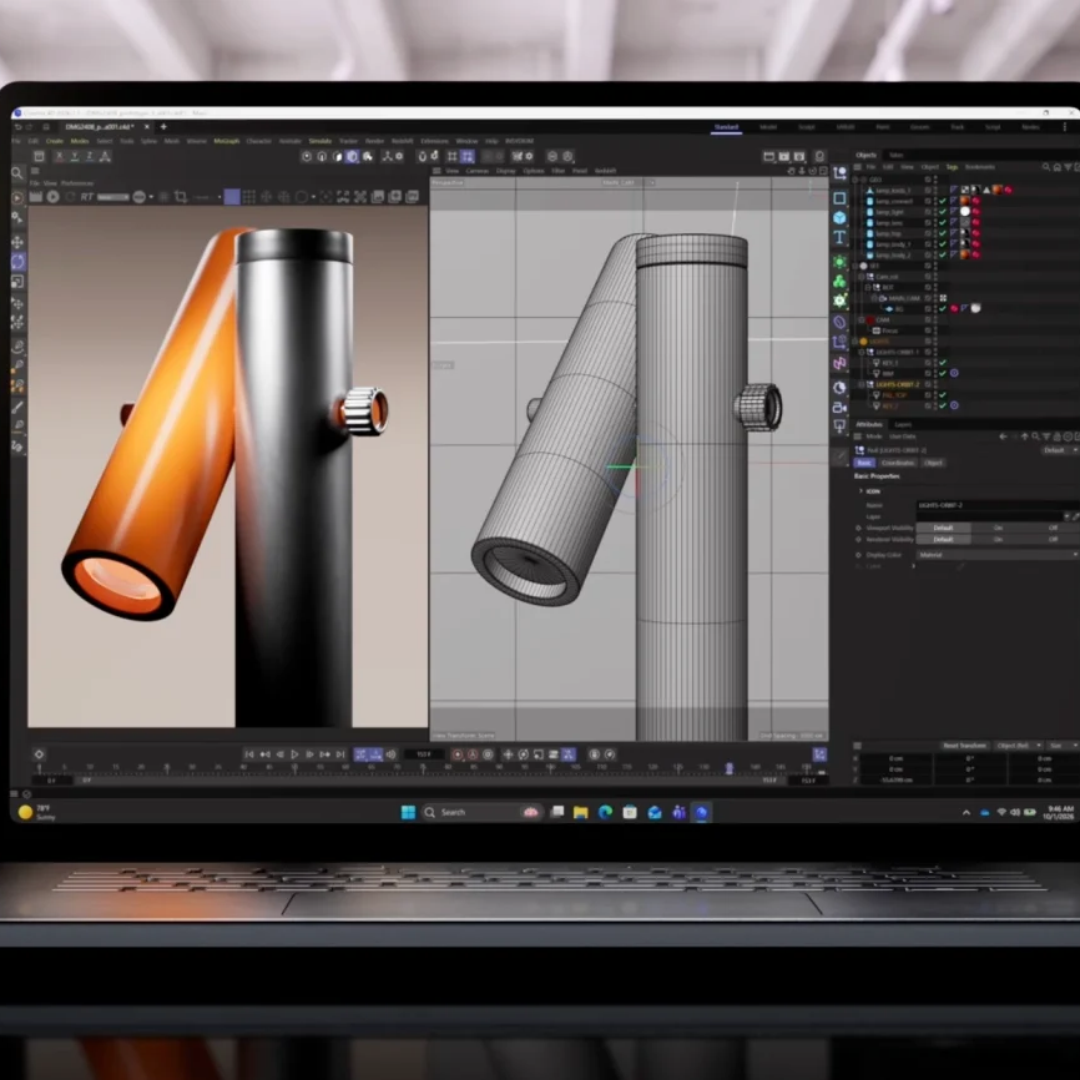
The announcements were made at a Microsoft event in San Francisco on Wednesday, where the company also introduced the high-performance Surface Laptop Ultra, powered by Nvidia’s RTX Spark chips.
Microsoft wants Windows PCs to handle more AI workloads locally, potentially reducing the need for some tasks to be processed through its Azure cloud infrastructure. The approach also gives users greater control over sensitive information, particularly where privacy is a concern.
A key announcement was Microsoft Execution Containers (MXC), a security system designed to prevent AI agents from accessing data or carrying out unauthorised actions on computers.
Microsoft said Anthropic, OpenAI and Nvidia will use the technology, while IT departments will be able to establish rules governing what AI agents can do on employees’ devices.
Nvidia CEO Jensen Huang, who appeared alongside Microsoft CEO Satya Nadella, described the technology as an important step for building and deploying AI agents safely.
Microsoft also announced that several AI models that previously required cloud computing can now run locally on powerful Windows machines. The company said a version of DeepSeek’s V4 model can run on systems with at least 60GB of memory and outperform OpenAI’s GPT-5 on some coding and reasoning tasks.
Microsoft’s Copilot will continue using the cloud for more demanding work, while delegating some tasks to local models when cost or privacy makes on-device processing preferable.
High Price Of Local AI
The biggest challenge could be affordability.
The new Surface Laptop Ultra starts at $2,599 (about R43,700) and rises to $5,899 (about R99,200) for a model with a 20-core processor, 128GB of memory and 1TB of storage.
Nvidia’s DGX Spark AI desktop has also risen to $6,950 (about R117,000), adding to concerns that powerful local AI could remain accessible mainly to users and businesses with larger budgets.
Analyst Anshel Sag said the software needed to run AI locally is now becoming more capable, but the rising cost of hardware could limit who can afford to use it.
Main Image: Microsoft