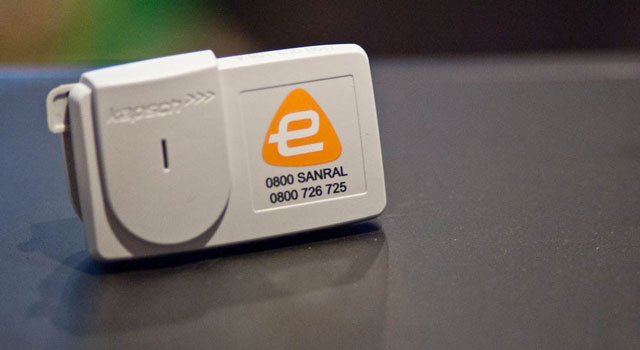
The South African National Roads Agency (Sanral) has reported a substantial rise in e-tag adoption following the shutdown of Gauteng’s controversial open road e-toll gantry system. The increase in e-tag activations marks a shift towards more widespread use of electronic tolling technology across the country.
E-tags are small electronic devices that allow for automatic toll collection as vehicles pass through toll points. These devices use radio frequency identification (RFID) technology to communicate with sensors mounted on toll gantries or plazas, enabling a contactless and efficient payment method.
While e-tags gained widespread attention in Gauteng’s e-toll system, which launched in 2013, the technology has actually been in use in South Africa for much longer. The Bakwena concession, for instance, introduced electronic toll collection at its plazas on the N1 and N4 in the early 2000s. Motorists with an e-tag can drive through toll lanes, and the boom gates will automatically open once the system confirms there is sufficient credit in their account.
E-Tags: A Simpler and More Efficient Tolling Solution
Sanral continues to advocate for the e-tag as the simplest and most efficient contactless payment mechanism for tolls, which is why the agency has rolled out the technology across all toll lanes at traditional “boom-down” toll plazas. This move allows for quicker, more seamless toll payments, reducing congestion and wait times at busy toll points.
Since the shutdown of the e-toll system in Gauteng at the end of April 2024, e-tag adoption has skyrocketed, with a significant increase in new activations across the country. Sanral provided figures showing that the total number of active e-tags had reached 1.8 million, with a marked rise in new e-tag activations starting in May 2024.
Significant Uptick in E-Tag Activations Post-E-Toll Shutdown
According to Sanral’s data, new monthly e-tag activations had been relatively stable at below 10,000 per month for much of 2022. The numbers increased slightly in 2023, averaging around 12,000 per month, before a sharp rise in April 2024, following the end of the Gauteng e-toll system.
In April 2024, just after the e-toll system’s closure, new e-tag activations jumped by 46%, from less than 12,000 per month to 17,500 in July 2024. By November 2024, the number had doubled to 25,000 new activations compared to the same month the previous year. This growth trend has continued into 2025, with the number of new e-tag sales nearly reaching 30,000 in recent months.
Year-on-Year Growth: 2025 Surpasses Previous Years
Sanral’s data also shows that e-tag adoption has significantly outpaced previous years. The agency revealed that roughly 144,500 new e-tags were activated between May and December 2024—representing a 34% increase from the 108,000 activations recorded in 2023. This surge came directly after the e-toll shutdown in Gauteng, highlighting the public’s increased preference for e-tag technology once the tolling system was dismantled.
Comparing adoption rates across the years, the data reveals that 2025 has seen a particularly strong start, with monthly activations consistently more than double those in 2022 and 2023. In just the first six months of 2025, close to 140,000 new e-tags have been issued.
Sanral’s figures demonstrate a clear trend of growing e-tag adoption across the country, especially in the months following the termination of the Gauteng e-toll system. As more motorists embrace the convenience and efficiency of electronic tolling, the future of the e-tag looks increasingly promising.
With almost 1.8 million active e-tags and a rapidly expanding user base, Sanral’s strategy of rolling out electronic toll collection nationwide seems to be gaining traction. The agency’s continued focus on e-tags as a streamlined, contactless solution for toll payments is likely to further bolster their adoption in the coming months and years.
Main Image: Tech Central