Google has launched a new account recovery feature that allows users to verify their identity with a short selfie video, offering an additional way to regain access if they become locked out of their accounts.
The feature is being rolled out globally for eligible personal Google accounts and complements existing recovery options such as passwords, passkeys, two-factor authentication and recovery contacts.
Rather than replacing traditional sign-in methods, Google says the selfie video serves as a backup solution for users who lose access to trusted devices or forget their login credentials.
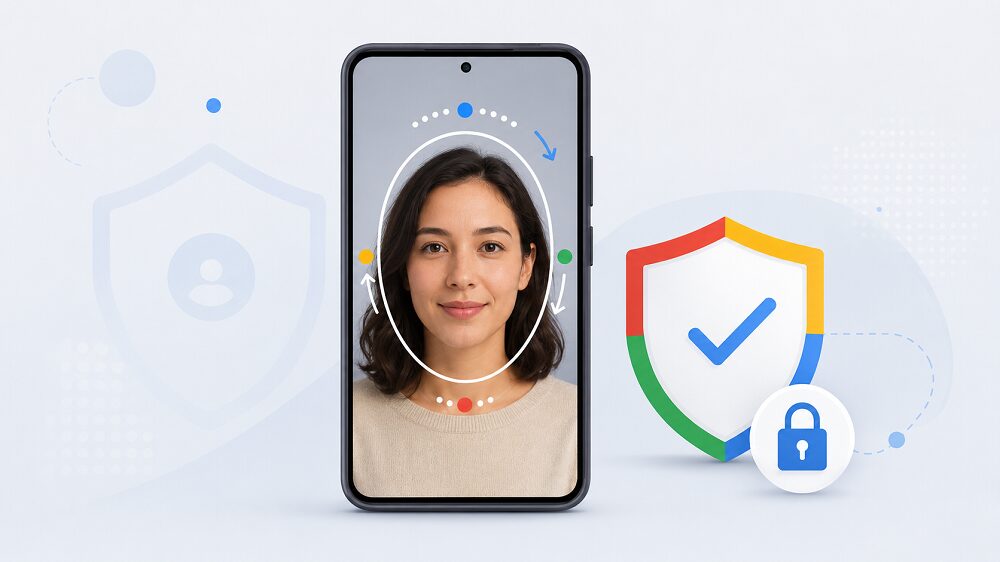
To activate the feature, users record a short selfie video while following on-screen prompts that capture multiple angles of their face. If they ever need to recover their account, they’ll be asked to record another selfie video, which Google’s system compares with the original to confirm their identity.
The feature is available for personal Google accounts linked to services including Gmail, Google Drive, Google Photos, Google Docs, Google Calendar, Google Meet and Google Contacts.
However, it is not currently supported for Google Workspace accounts, child accounts or users enrolled in Google’s Advanced Protection Programme.
Google says the verification process incorporates several safeguards to prevent fraud, including checks designed to detect AI-generated deepfakes and impersonation attempts.
During verification, users must perform live head movements to prove they are physically present, making it more difficult for attackers to bypass the system using photos or manipulated videos.
John Gronberg, Google’s Director of Product Management, said the company wants to provide users with more options for accessing their accounts while keeping personal information secure.
He encouraged users to set up multiple recovery methods rather than relying on a single authentication option.
Google says selfie videos are encrypted, stored securely and remain under the user’s control. Users can delete their biometric data at any time through their account settings.
The company also stressed that the videos are used only for account verification unless users explicitly choose to allow additional uses.
Despite these assurances, the introduction of biometric account recovery is expected to reignite discussions around the storage and protection of sensitive facial data, as technology companies increasingly adopt biometric authentication to improve both convenience and security.
With cyberattacks and account takeovers becoming more sophisticated, Google’s latest feature reflects the growing shift toward identity verification methods that go beyond traditional passwords while aiming to keep user accounts protected.
Main Image: Newbytes