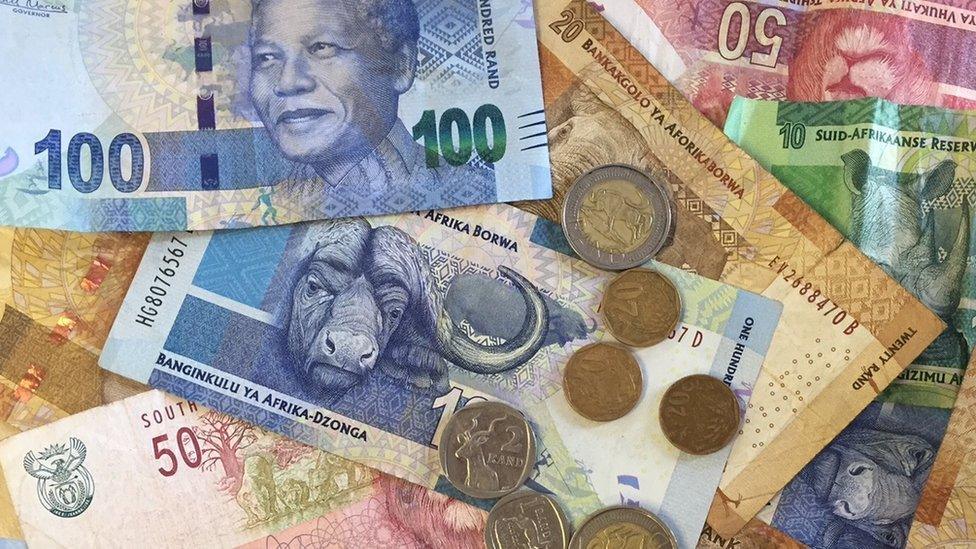
The South African rand could face renewed pressure in August, a month that has historically delivered some of the currency’s weakest performances against the US dollar.
According to historical data compiled by Bloomberg, the rand has recorded an average decline of more than 2% against the dollar during August since 1997, making it one of the most challenging periods of the year for the local currency.
Market analysts say seasonal trading patterns, combined with uncertainty over the South African Reserve Bank’s (SARB) monetary policy outlook, are adding to concerns about the rand’s near-term performance.
Hironori Sannami, a foreign exchange trader at Mizuho Bank, said the rand often comes under pressure during the European summer holiday period as investors reduce exposure to higher-risk assets and unwind carry trade positions.
The currency has already endured a difficult July after the SARB surprised financial markets by leaving interest rates unchanged despite warning that inflation risks remain elevated.
The decision, which divided the central bank’s Monetary Policy Committee, prompted an immediate sell-off in the rand, which weakened by more than 2% against the US dollar before recovering only part of those losses.
Economists say investors are now looking for greater clarity on the SARB’s approach to future interest rate decisions.
Gina Schoeman, South Africa economist at Citigroup, said the market is trying to determine whether the Reserve Bank’s policy stance has become less aggressive in responding to inflation risks.
The uncertainty has also prompted some investors to reassess their positions in South African assets.
Adding to the pressure, the US Federal Reserve recently maintained its hawkish tone, increasing expectations that US interest rates could remain higher for longer. Analysts warn that a widening gap between US and South African monetary policy could reduce the rand’s appeal to international investors seeking higher yields.
Mike Keenan, a fixed-income strategist at Absa, said the stronger US interest rate outlook and weaker global market sentiment could continue to weigh on the local currency over the coming months.
Investor confidence has also softened in South Africa’s bond market. Foreign investors became net sellers of South African government bonds during July, reversing the inflows recorded in the previous month as concerns around inflation and future interest rate decisions grew.
Portfolio manager Ruen Naidu of Ninety One said it remains too early to conclude that the SARB has fundamentally changed its policy direction. However, he noted that financial markets are increasingly interpreting the central bank’s latest decision as a signal that interest rates could remain elevated for longer rather than rise more aggressively.
With global investors remaining cautious and monetary policy uncertainty lingering both locally and internationally, economists expect the rand to remain sensitive to economic data and central bank decisions throughout August.
Source: Bloomberg.
Main Image: BBC