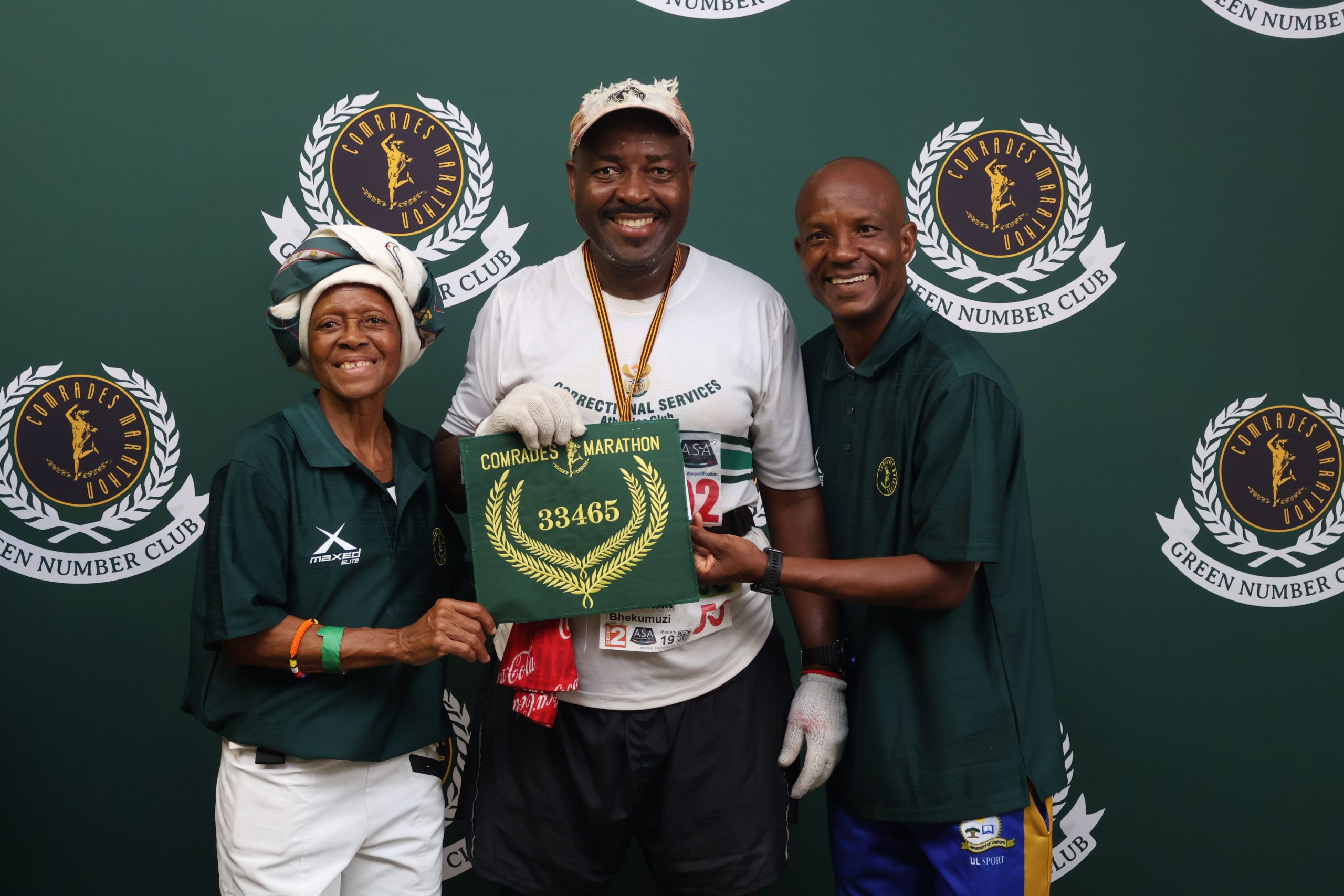
For 53-year-old Bhekumuzi Andrias Miya, the road to his 20th Comrades Marathon finish almost came to an end before he even reached the starting line.
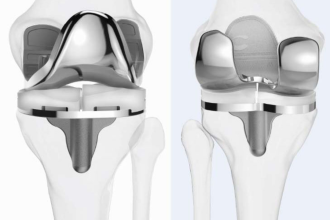
The correctional official and long-distance runner had been battling severe knee pain caused by advanced osteoarthritis, eventually receiving a recommendation for total knee replacement surgery.
After years of running ultras, Miya feared that the condition had brought his running journey to an end.
Instead, a non-surgical treatment approach helped him return to the road — and on 14 June 2026, he completed his 20th Comrades Marathon and secured his coveted double green number.
From Severe Pain To The Starting Line
Miya has been competing in ultra-distance races since 2003, but his knees began giving him serious trouble in 2019.
The pain gradually worsened, forcing him to rely on supplements and strong pain medication just to manage his condition.
An orthopaedic specialist eventually recommended knee replacement surgery.
“I thought my dream was shattered,” Miya recalled.
He was later referred to orthopaedic surgeon Dr G.H. Bayes, who assessed him on 26 March 2026 and confirmed that he had advanced osteoarthritis.
Rather than immediately proceeding with surgery, Dr Bayes developed a targeted treatment plan aimed at managing Miya’s condition without an operation.
A Different Approach To Joint Pain
Miya first received a cortisone injection to help manage inflammation. He was subsequently treated with Monovisc on 14 April 2026.
Distributed in South Africa by Anstem Medical, Monovisc is a single-injection hyaluronic acid viscosupplement designed to support lubrication and cushioning within the joint. According to the company, the treatment can provide up to six months of mobility and osteoarthritis pain relief.
For Miya, the results were significant.
Just two months after receiving the treatment, he stood at the start of the Comrades Marathon ready to take on one of the world’s most demanding ultra-distance races.
20th Comrades, Pain-Free
Miya went on to complete the race without experiencing the knee pain that had threatened to end his running career.
“I did not suffer any knee pain during the race,” he said. “To finish my 20th Comrades without that pain felt unbelievable. This treatment gave me back my running.”
His achievement represents more than another medal. It marked the completion of a long-held goal and earned Miya the Comrades Marathon double green number.
His experience also points to the growing interest in joint-preservation treatments among active people living with osteoarthritis.
Exploring Alternatives To Surgery
Treatments such as in-office hyaluronic acid injections are increasingly being considered as part of non-surgical approaches to managing joint conditions.
Anstem Medical says these treatments can be administered in a doctor’s practice, potentially avoiding some of the additional costs associated with hospital-based procedures, including facility fees, general anaesthesia and extended recovery stays.
The company also offers Cingal, an injection that combines hyaluronic acid with a corticosteroid and is designed to provide both longer-term joint support and more immediate relief from inflammation and pain.
For Miya, however, the biggest outcome was simple: he was able to get back on the road.
After believing that knee replacement might have ended his Comrades journey, the 53-year-old instead crossed the finish line for the 20th time — a milestone he once feared he would never reach.
Main Image: Supplied