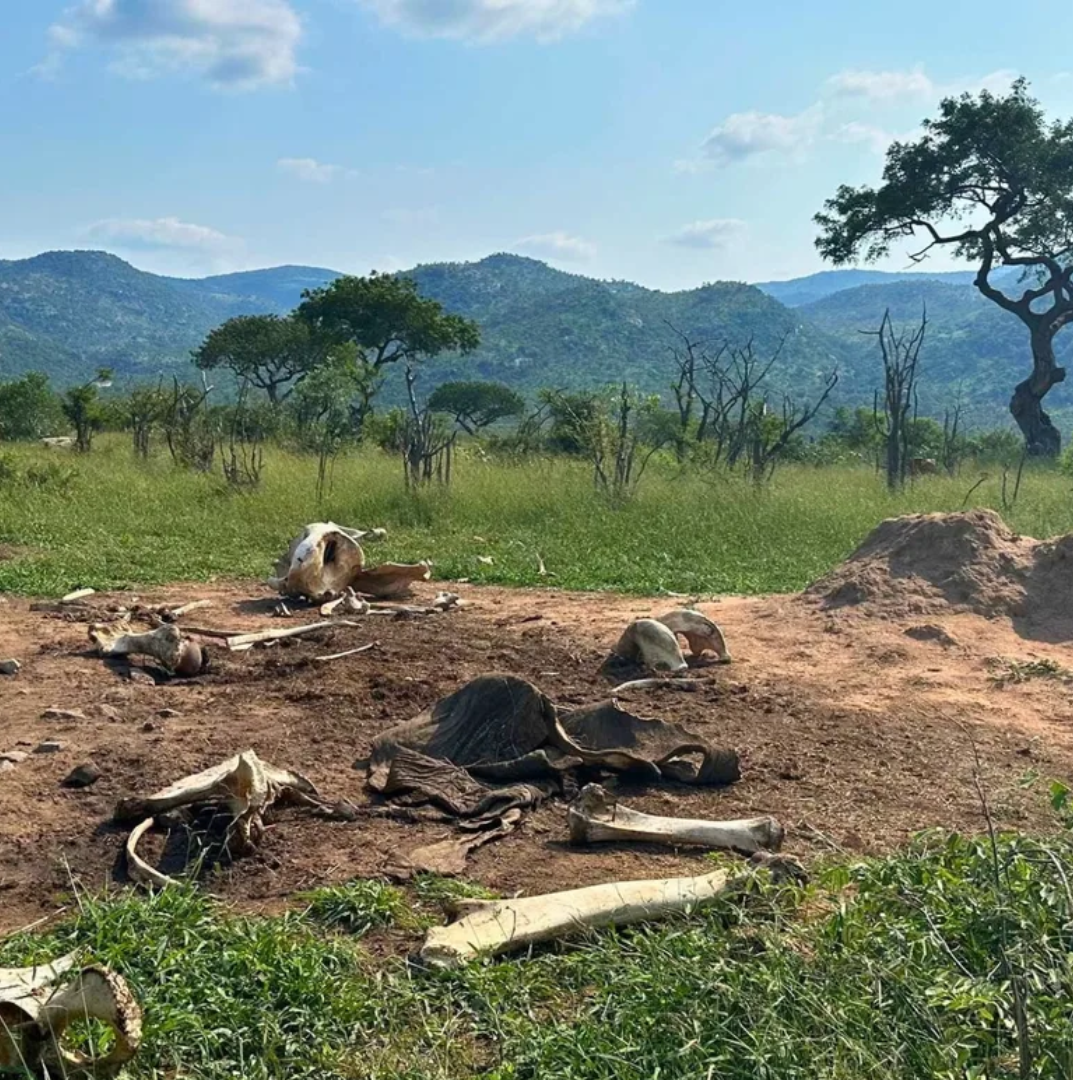
A dead elephant in South Africa’s Kruger National Park has helped scientists uncover a surprising discovery: an elephant’s influence on the environment can continue for years after its death.
The research was inspired by the death of a large bull elephant named Alexander, who died naturally in 2009. Scientists later studied elephant carcass sites to understand how decomposition affects soil, plants, microorganisms and wildlife.
Researchers discovered that elephant remains release large amounts of nutrients into the soil, creating nutrient-rich areas that can remain altered for at least eight years. At some sites, nitrogen levels were found to be up to 3,000 times higher than normal.
However, the effects were not entirely positive. Although the nutrients encouraged the growth of highly nutritious grasses that attracted grazing animals, the initial nutrient surge could prevent plants from growing. Scientists also observed reduced diversity among soil microbes and plant species, with these effects persisting for years.
The findings, published in the scientific journal Proceedings of the National Academy of Sciences, highlight how the death of a single giant animal can influence an entire ecosystem long after its remains have disappeared.
Scientists say the discovery offers new insight into the important role elephants play in maintaining the balance of African ecosystems, showing that their environmental impact does not end when they die.
Main image: BBC Wildlife magazine